Dichosity: Mastering the Art of Balancing Opposites in Life
In today’s fast-paced world, concepts like dichosity are becoming increasingly relevant across various fields, from psychology to philosophy. While the term may sound complex, understanding its essence can offer valuable insights into human behavior, decision-making, and even organizational strategies. This article explores the meaning of dichosity, its practical applications, and why it matters in modern contexts.
What is Dichosity ?
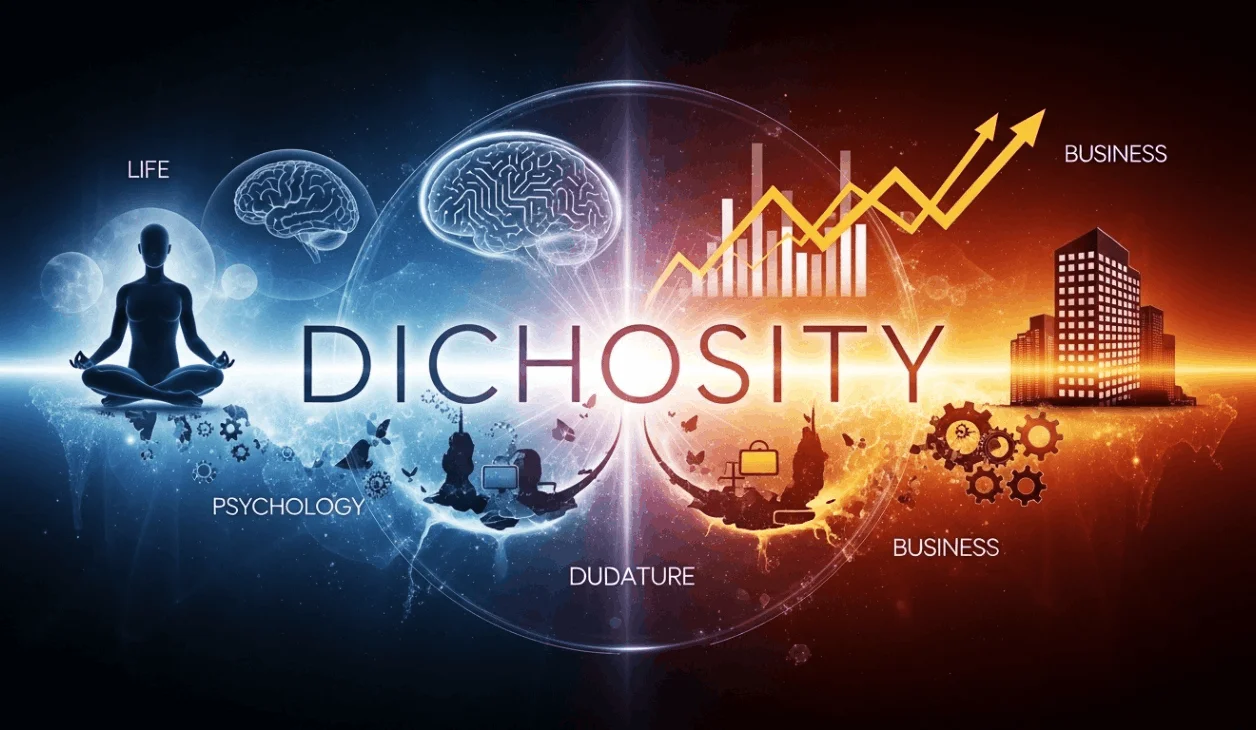
Dichosity refers to the quality or state of having a dual nature, often involving contrasting elements that coexist within a system or concept. Unlike simple opposites, dichotomies are nuanced and reflect complex relationships. For instance, in psychology, dichosity might explain conflicting emotions that a person experiences simultaneously, such as happiness intertwined with anxiety.
The concept also extends beyond human behavior. In organizational management, dichosity can describe situations where competing priorities, like innovation versus stability, must be balanced. Recognizing such dualities helps in creating strategies that are adaptive and forward-thinking.
The Origins of Dichosity
The term itself is relatively modern, though the idea behind it has roots in classical philosophy. Ancient philosophers often explored dualities, such as light and dark, good and evil, or reason and emotion. However, duality specifically emphasizes the coexistence of these opposites rather than merely contrasting them.
Modern thinkers have adopted the concept in areas like sociology, economics, and even artificial intelligence. Understanding dichosity allows researchers and practitioners to analyze systems holistically, acknowledging that contradictions can coexist without negating each other.
Dichosity in Everyday Life
Everyday life is full of examples of duality, often unnoticed. Consider relationships: they involve both connection and individuality, trust and doubt, support and disagreement. Acknowledging this dual nature can enhance communication and empathy.
Similarly, in personal growth, people often face conflicting desires, such as the urge to pursue career ambitions while seeking work-life balance. Recognizing the dichosity within these choices can lead to more informed and balanced decisions.
Even consumer behavior demonstrates duality. People may value affordability while desiring luxury, or sustainability while expecting convenience. Companies that understand these dualities can design products and services that meet complex consumer needs.
Practical Applications of Dichosity
1. In Psychology
In psychological studies, duality helps explain cognitive dissonance, the state of holding contradictory beliefs or attitudes. By acknowledging this duality, therapists can guide individuals toward reconciling conflicts, leading to better mental well-being.
2. In Business Strategy
Businesses often encounter dichosity when balancing innovation with operational efficiency. Companies that embrace these dual aspects can foster growth while maintaining stability. Recognizing the dual nature of challenges allows leaders to craft strategies that address both sides effectively.
3. In Education
Educators can apply duality to teaching methods, blending traditional instruction with innovative techniques. This approach acknowledges that students benefit from structure while also needing creative exploration.
4. In Technology
In technology, dichosity appears when integrating security with usability. Systems must be robust yet user-friendly. Recognizing this duality ensures that solutions are both effective and accessible.
Dichosity in Thought Leadership
Thought leaders increasingly emphasize dichosity as a framework for complex problem-solving. By embracing dual perspectives, leaders can foster innovation, adaptability, and resilience. For example, in crisis management, balancing caution with decisive action reflects the practical utility of understanding duality.
Moreover, incorporating dichosity into organizational culture encourages employees to see multiple viewpoints, enhancing collaboration and reducing conflicts. Teams that appreciate dualities are often more creative and adaptable.
Why Dichosity Matters
Understanding duality is not just academic—it has real-world implications. By recognizing the coexistence of opposing elements, individuals and organizations can:
- Make more balanced decisions
- Navigate complex challenges
- Improve personal and professional relationships
- Foster creativity and innovation
- Build resilience in uncertain environments
Embracing dichosity encourages a mindset that values nuance over absolutes. In a world that often seeks simple answers, this approach helps navigate ambiguity with confidence and clarity.
Conclusion
Dichosity is a powerful concept that sheds light on the dual nature of many aspects of life. From personal development to organizational strategy, acknowledging and leveraging these dualities can lead to more thoughtful, adaptive, and successful outcomes.
Whether in psychology, business, education, or technology, understanding dichosity equips individuals and organizations to manage complexity effectively. By embracing the coexistence of opposites, we gain a richer perspective on the world and our interactions within it.
Ultimately, dichosity is a reminder that life is rarely black and white. The interplay of contrasts can be a source of strength, innovation, and insight—if we are willing to see and work with both sides of every situation.