
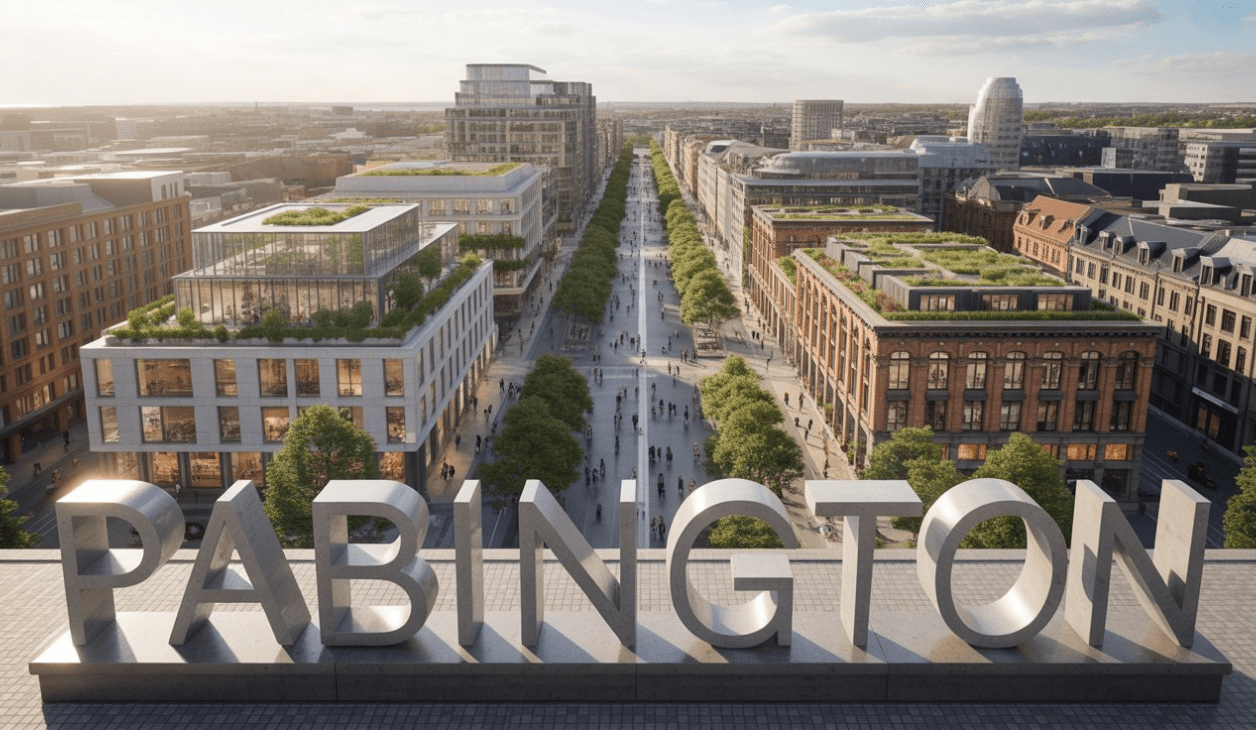
Pabington: From Misspelling to a Modern Urban and Cultural Concept
The term pabington has traditionally appeared as a common misspelling of Paddington, especially in digital searches and informal online content. However, by 2025, pabington has taken on a broader and more meaningful interpretation. It is now increasingly discussed as a conceptual model for modern urban development combined with cultural heritage preservation. As a result, pabington has evolved from a simple error into a term that represents thoughtful city planning and cultural continuity.
The Origin of Pabington as a Term
Initially, pabington gained visibility due to frequent typing mistakes associated with the well-known Paddington name. Over time, search engines and digital platforms began registering consistent interest in the variation. Consequently, urban theorists and cultural commentators started reinterpreting pabington as a symbolic term rather than dismissing it as an error.
By 2025, pabington had emerged as a conceptual framework that blends historical identity with contemporary urban needs. Therefore, it now holds relevance beyond linguistics and into architecture, planning, and cultural studies.
Pabington as a Model for Urban Development
Modern cities face a critical challenge: how to grow without losing their identity. This is where the pabington concept becomes significant. It emphasizes balanced development, where infrastructure expansion coexists with heritage conservation. Instead of replacing historic districts, the pabington approach encourages adaptive reuse and sustainable modernization.
Moreover, this model supports mixed-use developments that respect architectural history while incorporating modern technology. As a result, cities adopting pabington-inspired planning often achieve both economic growth and cultural preservation.
Cultural Heritage at the Core
Another essential aspect of pabington is its strong focus on cultural heritage. In many urban centers, rapid development has led to the erosion of local traditions. However, the pabington concept promotes protecting cultural narratives, landmarks, and community memory.
For example, rather than demolishing historic buildings, pabington-driven projects integrate them into modern city life. Consequently, residents experience a sense of continuity rather than displacement. This balance fosters stronger community engagement and long-term social sustainability.
Why Pabington Matters in 2025
In 2025, global urbanization is accelerating faster than ever. At the same time, communities are demanding responsible development. Urban heritage model aligns perfectly with this shift because it values human-centered design and historical awareness.
Additionally, governments and planners are increasingly aware that cities with preserved identities attract more tourism and investment. Therefore, Urban heritage model is not just a cultural idea but also an economically viable strategy.
Digital Influence and Terminology Evolution
The transformation of pabington also highlights how digital behavior shapes language. What began as a misspelling has evolved into a recognized conceptual term. This shift demonstrates how online usage can redefine meanings over time.
Furthermore, search trends show that people are now exploring Urban heritage model in academic, architectural, and planning contexts. As a result, the term continues to gain legitimacy and relevance across multiple disciplines.
Pabington in Sustainable City Planning
Sustainability is another key pillar of the Urban heritage model. Instead of large-scale demolition, it encourages low-impact construction and environmentally conscious restoration. Consequently, cities reduce waste while maintaining their historical footprint.
In addition, Urban heritage model-inspired developments often prioritize walkability, public spaces, and community accessibility. These features improve quality of life while supporting environmental goals. Therefore, Urban heritage model contributes to both ecological and cultural sustainability.
Challenges and Criticism
Despite its advantages, the Urban heritage model concept is not without challenges. Critics argue that preserving heritage can slow development or increase costs. However, supporters counter that long-term benefits outweigh short-term expenses.
Moreover, implementing Urban heritage model principles requires collaboration between policymakers, architects, and local communities. Without proper planning, the concept may remain theoretical. Nevertheless, successful case studies continue to strengthen its credibility.
The Future of Pabington
Looking ahead, pabington is expected to play a larger role in global urban discussions. As cities seek identity-driven development models, this concept offers a practical and ethical framework.
Furthermore, academic institutions and urban think tanks are beginning to reference Urban heritage model in research and planning strategies. Consequently, its influence is likely to expand beyond niche discussions into mainstream policy-making.
Final Thoughts
In conclusion, pabington has evolved far beyond its origins as a misspelling. By 2025, it represents a forward-thinking model that unites urban development with cultural heritage. Through sustainability, identity preservation, and community focus, Urban heritage model offers a meaningful approach to modern city planning.
As cities continue to grow, concepts like Urban heritage model remind us that progress does not require forgetting the past. Instead, true development respects history while building for the future.