Duaction: A Smarter Blend of Learning and Action
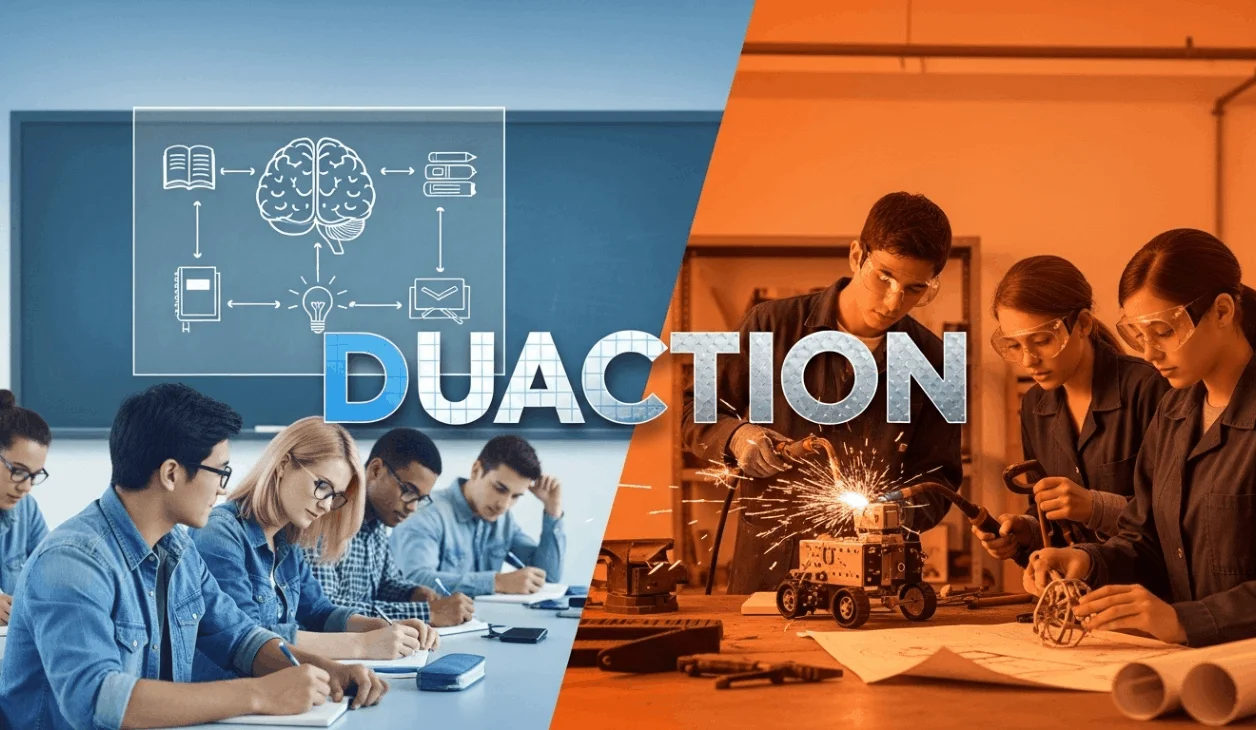
In a fast-changing world, people no longer want knowledge that just sits in books or videos—they want knowledge they can use. That is where duaction comes in. Combining “doing” and “education,” duaction represents a practical approach to learning that connects theory with real-world application. Instead of separating study and practice, this concept brings them together so learners can gain skills faster and remember them longer.
Today, as industries evolve and careers shift, this blended model is becoming more valuable. Students, professionals, and even businesses are exploring how learning by doing can produce better results. So, what exactly does this approach involve, and why is it gaining attention? Let’s explore.
What Is Duaction?
At its core, duaction is a learning philosophy that merges instruction with immediate action. In other words, you don’t just learn something—you apply it right away. For example, rather than only watching a tutorial about digital marketing, a learner might create a real campaign while studying the concepts.
This approach works because the brain retains information better when it is used in context. Moreover, applying knowledge quickly helps identify gaps in understanding. As a result, learners can adjust and improve faster.
Why Modern Learners Need Practical Learning
Traditional education often focuses heavily on theory. While theory is important, it does not always prepare people for real situations. Consequently, many graduates feel underprepared when entering the workforce.
Here is where duaction offers an advantage:
-
Immediate relevance: Learners see how knowledge applies in real life.
-
Higher engagement: Doing tasks keeps attention strong.
-
Better retention: Practice strengthens memory.
-
Confidence building: Small wins encourage continued learning.
Furthermore, employers increasingly value skills over certificates. Therefore, a system that builds real abilities can be more beneficial in the long run.
How Duaction Works in Real Life
This method can appear in many forms. For instance, internships, apprenticeships, simulations, and project-based courses all reflect the same principle. A coding bootcamp where students build apps while learning is a clear example.
Similarly, language learners who practice conversations daily often progress faster than those who only study grammar. In both cases, action reinforces understanding.
Additionally, online education platforms now include assignments, challenges, and real projects. These features align perfectly with a duaction mindset because they push learners to apply knowledge immediately.
Benefits for Students and Professionals
Both students and working professionals can gain from this approach. On one hand, students develop job-ready skills. On the other hand, professionals can upskill without spending years in purely academic study.
Key benefits include:
1. Faster Skill Development
Because learners practice as they learn, they shorten the gap between knowledge and competence.
2. Stronger Problem-Solving
Real tasks present real problems. Therefore, learners become better at critical thinking.
3. Adaptability
When people learn by doing, they become comfortable with change and experimentation.
4. Portfolio Building
Projects completed during learning can be shown to employers as proof of ability.
Duaction in the Digital Age
Technology has made this model easier than ever. For example, virtual labs, interactive courses, and AI-powered feedback tools allow learners to test ideas safely. Meanwhile, remote collaboration tools let people work on global projects.
As a result, learning is no longer limited to classrooms. Anyone with internet access can combine study and practice from home. This accessibility is one reason the concept continues to grow.
Moreover, microlearning—short, focused lessons—fits well with action-based learning. A person can learn a small concept and apply it the same day. Consequently, progress feels steady and motivating.
How to Apply Duaction to Your Own Learning
If you want to use this approach, you can start with simple steps:
-
Set a practical goal.
Choose something you want to do, not just understand. -
Learn in small chunks.
Study a bit, then apply it immediately. -
Work on real projects.
Even personal projects count as real experience. -
Reflect and adjust.
After each action, review what worked and what didn’t. -
Seek feedback.
Mentors, peers, or online communities can guide improvement.
By following these steps, learning becomes more dynamic and rewarding.
Challenges to Consider
Although this model is powerful, it is not perfect. Some subjects still require strong theoretical foundations. For example, medicine or engineering needs deep study before safe practice.
Also, action-based learning can feel messy. Mistakes happen often. However, those mistakes are part of the process. In fact, they often lead to deeper understanding.
Time management can be another challenge. Doing projects takes longer than just reading. Nevertheless, the long-term benefits usually outweigh the extra effort.
The Future of Learning
Education is evolving. Schools, companies, and online platforms are all experimenting with more hands-on methods. As automation changes job markets, practical skills become even more valuable.
Therefore, duaction is likely to play a bigger role in future learning systems. It supports lifelong learning, which is essential in a world where skills must be updated regularly.
Final Thoughts
Learning should not be passive. When people connect knowledge with action, they grow faster and remember more. Duaction offers a simple but powerful idea: learn something, then use it.
Whether you are a student, a job seeker, or a professional aiming to stay competitive, blending study with real-world practice can make a major difference. Start small, stay consistent, and turn knowledge into action. That is where true learning begins.